The Hidden Cloud Bill Killer: Data Transfer and Egress Fees
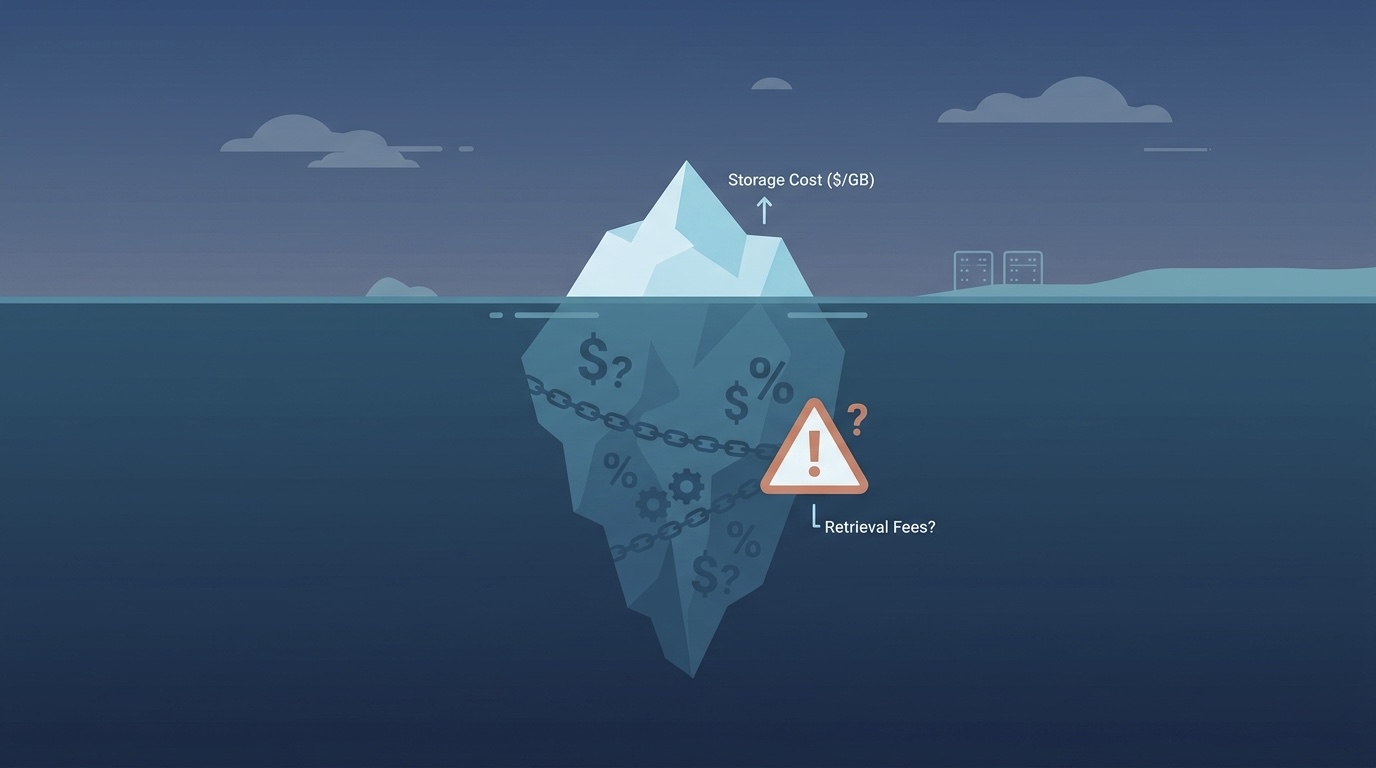
Cloud computing has unlocked incredible agility for SaaS platforms and AI workloads. Yet for many startups and scale-ups, a silent threat is devouring their budgets: data transfer and egress costs. Most engineering teams focus on compute and storage efficiency, but overlook the architectural patterns that trigger expensive network charges. NAT gateways, inter-AZ replication, and multi-region traffic can quietly surpass your EC2 or serverless spending, creating cloud waste that eats into your margins.
In this comprehensive guide, we will break down how these hidden fees arise, why they are growing with AI and serverless adoption, and how cloud cost optimization practices, supported by FinOps and infrastructure modernization, can radically reduce your cloud bill.
Why Data Transfer Costs Are Exploding
Cloud bills used to be predictable, dominated by compute and storage. But the shift toward microservices, distributed AI pipelines, and multi-region redundancy has transformed the cost equation.
Key drivers of egress and data transfer costs include:
-
NAT Gateway Charges
NAT gateways in AWS charge per GB of data that leaves private subnets for the internet. High-throughput serverless or container workloads that access external APIs can generate massive NAT egress bills. -
Inter-AZ and Inter-Region Traffic
High availability architectures often replicate data across Availability Zones or regions. Each transfer across zones incurs a fee, and cross-region replication is even more expensive. -
Serverless VPC Traffic
Lambda functions connected to VPCs route outbound traffic through NAT gateways, multiplying costs. AI workloads moving vectors or embeddings between storage and inference layers suffer most. -
Unoptimized CDN and Caching
Applications that do not leverage edge caching push every request through the origin, inflating egress charges. -
Growing AI and ML Workloads
Training and inference pipelines continuously transfer large volumes of vector data and model weights between services, exacerbating data transfer fees.
Pro Tip: According to AWS documentation, NAT gateway charges can surpass EC2 compute costs in high-throughput scenarios.
The Financial Impact on SaaS and AI Startups
Unmanaged data transfer can quietly add 25% to 60% to monthly cloud bills. A few examples from real-world environments illustrate the risk:
-
Startup A (AI Inference Platform)
70% of their AWS network spend came from Lambda functions routing through NAT gateways. Their EC2 cost was $7,000 per month, but NAT and egress bills reached $11,000. -
Startup B (Multi-Region SaaS)
They replicated databases and object storage across three regions for redundancy. Cross-region replication cost exceeded $30,000 monthly, despite compute being under $20,000. -
Startup C (Real-time Analytics)
Inter-AZ data transfer for Kafka traffic drove $15,000 in hidden egress charges per month. Once optimized, savings exceeded 40%.
These patterns demonstrate the need for cloud financial management and a FinOps-driven architecture review.
Step-by-Step Playbook for Cloud Cost Optimization
Below is a proven framework to identify, analyze, and eliminate unnecessary data transfer expenses.
Step 1: Audit Your Data Transfer Patterns
Use native cloud cost tools and logging to identify egress hotspots:
- In AWS, leverage Cost and Usage Reports (CUR) with Athena queries to pinpoint NAT gateway and inter-AZ charges.
- In GCP, use the Network Topology and Billing Export features for visibility.
- In Azure, leverage Network Watcher and Cost Analysis for outbound traffic mapping.
Checklist:
| Audit Task | Tool | Frequency |
|---|---|---|
| Identify NAT Gateway traffic | AWS CUR + CloudWatch Logs | Weekly |
| Map Inter-AZ data flows | VPC Flow Logs | Monthly |
| Track multi-region replication | S3/DB Replication Metrics | Monthly |
| Analyze CDN Offload ratios | CloudFront / Cloud CDN | Weekly |
Step 2: Optimize NAT Gateway Usage
NAT gateways are convenient but costly. Consider:
- Switching to VPC Endpoints for S3 and DynamoDB to avoid unnecessary egress.
- Using IPv6 for Lambda functions to bypass NAT costs for outbound internet traffic.
- Consolidating NAT Gateways to reduce hourly costs.
Real-world example:
A fintech SaaS reduced NAT spend by 68% by moving all internal S3 calls to Gateway Endpoints and enabling IPv6 for Lambda.
Step 3: Reduce Inter-AZ and Inter-Region Transfers
High availability does not always require aggressive cross-zone replication. Apply these strategies:
- Localize traffic using zonal architectures where possible.
- Use caching layers to reduce redundant replication.
- Rethink multi-region replication where RPO/RTO tolerances allow.
Playbook Action:
- Map traffic between AZs and regions.
- Evaluate if every data flow is critical.
- Implement caching or async replication where feasible.
Step 4: Leverage CDN Offload and Edge Caching
A content delivery network reduces origin egress and improves performance.
- CloudFront, Cloud CDN, or Azure CDN can offload 60-90% of traffic.
- Ensure cache policies are correctly tuned for static and semi-static content.
Cost Impact:
One AI SaaS cut egress from $20,000 to $8,500 per month after configuring CloudFront with proper TTLs and compression.
Step 5: Adopt FinOps and Cloud Financial Management
FinOps is a team sport combining engineering, finance, and operations to manage cloud spend. Integrating FinOps ensures continuous optimization rather than reactive cost-cutting.
Practical Framework:
- Inform – Enable visibility using tools like CloudHealth, CloudZero, or native cost explorers.
- Optimize – Continuously address hotspots including NAT, inter-AZ, and CDN miss costs.
- Operate – Embed cost ownership in DevOps workflows.
For expert guidance on implementing FinOps and reducing cloud waste, explore our Cloud Cost Optimization and FinOps services.
Step 6: Modernize Your Infrastructure
Outdated architectures lead to unnecessary egress and underutilized assets. Infrastructure modernization allows you to:
- Shift to modern infrastructure patterns like serverless with IPv6 support.
- Adopt application modernization to reduce chatty network calls.
- Implement hybrid cloud modernization to minimize cross-cloud transfers.
A successful cloud migration strategy often includes these redesigns to prevent future cost spikes. For legacy workloads, legacy system modernization plus DevOps transformation is key to sustainable savings.
Learn more about cloud migration strategies that reduce total cost of ownership.
Step 7: Continuous Monitoring and Automation
Cloud cost optimization is not a one-time event. Automate alerts and dashboards:
- Budget Alerts: Trigger notifications on thresholds.
- Automated Reports: Weekly egress summaries by service.
- Optimization Pipelines: Integrate cost checks in CI/CD to catch regressions.
| Automation Tool | Use Case |
|---|---|
| AWS Budgets | Budget alerts and forecasts |
| GCP Recommender | Cost-saving recommendations |
| Azure Advisor | Network optimization insights |
| Third-party FinOps tools | Cross-cloud visibility and alerting |
Key Takeaways
Cloud cost optimization is not only about compute and storage. Data transfer, NAT gateway, and egress charges can silently consume more than half your cloud budget. By auditing traffic, leveraging IPv6, offloading via CDN, and adopting FinOps best practices, you can:
- Reduce cloud costs by 30–70%
- Achieve real infrastructure modernization
- Prevent cloud waste from network inefficiencies
- Support application and DevOps transformation without compromising reliability
SaaS and AI startups that embrace cloud financial management and modern infrastructure principles will not only protect their margins but also build a scalable foundation for growth.
Ready to regain control of your cloud bill? Explore our Cloud Cost Optimization and FinOps consulting to implement these strategies today.