Navigating the New Normal of Software Delivery
In 2025, startups are operating in one of the most competitive and fast moving technology landscapes ever seen. New products launch daily, customer expectations are higher than ever, and funding environments demand careful control of burn rate. At the same time, engineering teams are expected to deliver features faster, more reliably, and with fewer people.
This is where serverless computing and cloud native DevOps come into focus.
Cloud native architectures are no longer experimental. They are the default choice for modern startups that want to build scalable systems without investing heavily in data centers or traditional infrastructure management. Serverless platforms such as AWS Lambda, Azure Functions, and Google Cloud Functions now power everything from MVPs to large scale production systems.
But this evolution brings a new reality. While infrastructure management has become easier, operational complexity has increased. Distributed systems, event driven workflows, and multi cloud tools introduce new challenges in monitoring, security, and cost control. DevOps is no longer just about deployment automation. It is about building a sustainable engineering culture that balances speed, reliability, and financial discipline.
This guide explores how startups can use serverless and cloud native DevOps practices in 2025 to stay competitive. You will learn what has changed, what tools matter most, and how to build a practical strategy that supports long term growth.
Why Startups Need Serverless and Cloud-Native DevOps
For early stage and growth stage companies, every technical decision has long term impact. The infrastructure choices you make today can either unlock future agility or create painful bottlenecks down the road.
Here is why serverless and cloud native DevOps matter more than ever.
1. Speed Without Sacrifice
Speed is the lifeblood of startups. You need to test ideas quickly, gather feedback, and iterate before competitors do. Cloud native platforms give teams the ability to spin up environments in minutes instead of weeks.
Containers, managed Kubernetes services, and serverless compute eliminate the need to provision and maintain servers manually. Developers can deploy code directly to production grade environments with minimal friction. Continuous integration and continuous delivery pipelines ensure that features move from commit to customer in hours, not days.
Most importantly, this speed does not come at the expense of stability. With proper DevOps practices, automation improves consistency and reduces human error.
2. Cost Efficiency That Scales With You
Traditional infrastructure models require paying for capacity upfront, even when systems sit idle. For startups with unpredictable traffic and limited budgets, this is a major disadvantage.
Serverless and cloud native models follow a pay as you go approach. You only pay for the compute you actually use. Event driven architectures eliminate idle resources and automatically scale during peak demand.
When combined with strong FinOps practices, this makes cost forecasting more predictable. Engineering teams gain visibility into how architectural decisions affect cloud spend, allowing leaders to balance growth and financial sustainability.
3. Focus on Product Instead of Operations
In many startups, a small engineering team wears many hats. Developers become accidental system administrators. Valuable time is lost maintaining infrastructure instead of improving the product.
Serverless and managed cloud services shift this burden away from your team. Core operational tasks like scaling, patching, and high availability are handled by the platform provider. DevOps becomes about building efficient workflows rather than firefighting production issues.
This allows teams to focus on what truly matters: delivering value to customers and validating business ideas faster.
Key Challenges in Serverless and Cloud-Native Adoption
While the benefits are compelling, the journey to cloud native DevOps is not always smooth. Startups must navigate several common obstacles along the way.
Tooling Fragmentation
The modern DevOps ecosystem is rich but overwhelming. For almost every problem, there are multiple tools that claim to be the best solution.
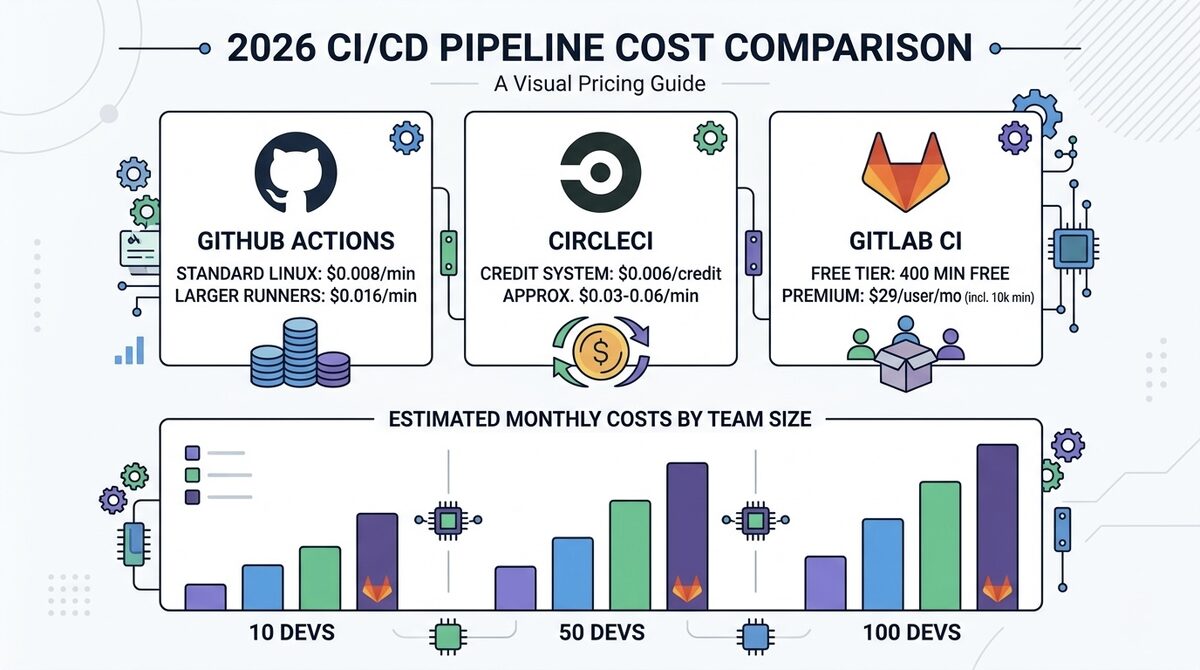
Teams struggle to choose between Terraform and Pulumi for infrastructure as code. They debate using AWS Lambda versus container based workloads on Fargate. They compare GitHub Actions, GitLab CI, CircleCI, and Argo CD for pipeline automation.
Without a clear strategy, startups risk building a stack that is complex, inconsistent, and difficult to maintain.
Observability Gaps
Traditional monitoring tools were designed for long running servers. Serverless changes the rules. Functions spin up and down in seconds. Requests flow through dozens of microservices. Failures can be hard to trace.
Without proper observability, teams lose visibility into performance and reliability. Debugging becomes reactive and stressful. This is one of the most common pain points for startups adopting serverless too quickly without investing in telemetry.
Security and Compliance Pressure
As startups grow, they face increasing security and regulatory expectations. Customers demand data protection. Investors expect strong governance. Partners require compliance with industry standards.
In a cloud native world, security must be automated. Secrets management, identity control, API security, and vulnerability scanning all need to be embedded directly into the DevOps pipeline. This shift to DevSecOps requires both cultural and technical change.
What Cloud-Native DevOps Looks Like in 2025
DevOps in 2025 looks very different from what it was even five years ago. The focus has shifted from tool mastery to platform thinking and developer experience.
Automation First Pipelines
Manual deployment is no longer acceptable in modern teams. Everything from infrastructure provisioning to application release is automated.
GitOps has become a dominant model. Configuration changes are made through version controlled repositories and automatically applied by systems like FluxCD or Argo CD. This creates consistency, traceability, and easy rollback when things go wrong.
Internal developer platforms such as Backstage now serve as a central hub where teams can access templates, documentation, and deployment workflows in one place.
Shift Left Everything
Security, performance, and compliance no longer wait until the end of the development cycle. They are integrated from the first commit.
Developers receive instant feedback from AI powered code analysis tools. Policy as code frameworks enforce governance automatically. Runtime security systems detect anomalies in real time.
This proactive approach reduces risk and builds trust in continuous delivery.
FinOps as a Core DevOps Discipline
Cost management is now part of the DevOps mission. Teams track cloud usage alongside performance metrics. Dashboards show not only response time and error rates but also cost per transaction.
Engineers understand how architectural choices affect spend. Leaders make informed decisions about scaling strategies. This financial awareness turns cloud from a liability into a competitive advantage.
Event Driven and Scalable Infrastructure
Serverless workflows are now a standard pattern. Services like AWS Step Functions and Google Cloud Workflows orchestrate complex business processes without dedicated servers.
This event driven model improves resilience and reduces operational burden. Failures are isolated, retries are automatic, and scaling happens transparently.
Building Your Serverless DevOps Stack: A Practical 5 Step Playbook
At LeanOps, we help startups implement DevOps systems that deliver speed without sacrificing stability. Here is a proven framework that works across industries and stages.
Step 1: Choose the Right CI/CD Backbone
Your delivery pipeline is the foundation of everything else. Start with a cloud native CI/CD platform that integrates well with your codebase and cloud provider.
Popular options include GitHub Actions, GitLab CI/CD, and Argo Workflows. From day one, automate testing, linting, and security scans. The goal is to make quality the default, not an afterthought.
Fast feedback loops encourage developers to ship confidently and frequently.
Step 2: Adopt Serverless Strategically
Not every workload belongs on serverless, but many benefit from it. Background processing, scheduled jobs, image transformation, and API endpoints are ideal candidates.
Start small. Identify a few components that can be migrated without risk. Use frameworks like Serverless Framework or AWS SAM to manage deployments consistently.
This incremental approach builds confidence and avoids large scale disruptions.
Step 3: Make Infrastructure Declarative
Infrastructure as code is essential in 2025. Whether you use Terraform or Pulumi, define your environments in version controlled files.
Apply GitOps principles so that code becomes the single source of truth. Changes go through the same review process as application code. This improves reliability and simplifies audits.
Declarative infrastructure also makes onboarding easier. New team members understand the system by reading the repository instead of tribal knowledge.
Step 4: Embed Observability and FinOps
You cannot manage what you cannot see. Invest early in observability tools that support distributed systems.
OpenTelemetry provides a standard way to collect metrics, logs, and traces. Platforms like Datadog, CloudWatch, and New Relic turn that data into actionable insights.
Pair technical monitoring with cost visibility tools such as AWS Cost Explorer or CloudZero. Make cloud spend part of your regular engineering conversations.
Step 5: Treat Security as a First Class Citizen
Security must be built into every layer of your DevOps stack. Adopt zero trust principles where every request is authenticated and authorized.
Use centralized secrets management tools like HashiCorp Vault or AWS Secrets Manager. Automate vulnerability scanning for code, containers, and dependencies. Enforce least privilege access across cloud resources.
This proactive approach reduces risk and builds confidence with customers and partners.
Best Practices for Serverless and Cloud-Native Teams in 2025
As startups mature, certain practices consistently separate high performing teams from the rest.
Use Feature Flags
Feature flags allow teams to deploy code without immediately exposing it to users. This decouples release from deployment and enables safer experimentation.
You can roll out features gradually, test in production, and roll back instantly if issues arise.
Invest in Service Mesh and API Management
For microservices architectures, service mesh technologies like Istio and Linkerd provide observability, traffic control, and security at scale.
API gateways and management platforms help standardize authentication, rate limiting, and monitoring across services.
Build an Internal Developer Platform
Developer experience has become a strategic advantage. Internal platforms built on tools like Backstage reduce cognitive load and make it easier for teams to do the right thing.
Standardized templates, automated environments, and self service tools increase productivity and reduce frustration.
Practice Chaos Engineering
Resilience cannot be an afterthought. Chaos engineering introduces controlled failures to test how systems behave under stress.
By simulating outages, latency, and resource exhaustion, teams identify weaknesses before customers do.
Enable Platform Engineering
Many successful startups now invest in platform engineering teams that focus on building and maintaining shared infrastructure.
This frees product teams to focus on features while ensuring consistency and quality across the organization.
How LeanOps Helps Startups Succeed
At LeanOps, we go beyond traditional DevOps services. We partner with startups to build resilient, future ready engineering platforms that scale with the business.
Our team specializes in:
- Designing serverless architectures that balance performance and cost
- Implementing cloud native CI/CD pipelines with GitOps workflows
- Managing Kubernetes environments with security and reliability in mind
- Integrating observability and FinOps tools for full operational visibility
Whether you are launching your MVP or preparing for your next funding round, we help you build infrastructure that supports growth instead of slowing it down.
Our approach is practical, not theoretical. We focus on solutions that work in real world startup environments.
Ready to Level Up Your DevOps in 2025?
The future of software delivery is already here. Serverless and cloud native technologies offer unprecedented speed and flexibility. But without a strong DevOps foundation, they can quickly become a source of complexity and cost.
With the right strategy, startups can turn this complexity into a competitive advantage. By automating workflows, embedding security, and aligning engineering with financial goals, you create a platform that grows with your business.
LeanOps is here to help you build that foundation from day one.
If you are ready to simplify your infrastructure, accelerate delivery, and gain control over your cloud costs, let’s talk.
Explore our services or contact us today for a free DevOps readiness assessment.