Introduction: The Cloud Promise and the Startup Reality
Cloud infrastructure was supposed to level the playing field. A small team with a bold idea could suddenly compete with industry giants by spinning up world-class systems in minutes. No massive capital investment. No long procurement cycles. Just speed, flexibility, and innovation.
For many startups, that promise feels only half fulfilled.
Instead of clarity and control, cloud environments often turn into a maze of services, billing surprises, and performance tradeoffs. Bills grow faster than revenue. Engineers worry about uptime. Founders worry about burn rate. What started as an enabler slowly becomes a source of stress.
The numbers confirm this reality. Industry research shows that nearly 78 percent of companies waste between 20 and 50 percent of their cloud spending. Cost optimization is now the top priority for small and mid-sized businesses running on the cloud. For early-stage startups and Series A or B companies, this waste is not just inefficient. It threatens runway, slows hiring, and forces painful tradeoffs.
At LeanOps, we work with fast-moving technology teams to eliminate cloud waste and operational complexity so they can scale like large tech companies without hiring like them. In this guide, we will unpack why cloud inefficiency is so common and how your startup can take back control starting today.
The Real Cost of Cloud Waste
Cloud waste rarely shows up as one big obvious mistake. It hides in dozens of small decisions made under pressure. Each one seems harmless in isolation, but together they create a major drain on your budget.
Here are the most common sources of wasted cloud spend we see when auditing startup environments.
1. Idle Resources That Never Sleep
Development and staging environments are often left running 24 hours a day. Test servers stay online long after a sprint ends. Proof-of-concept systems are forgotten but still billing every month.
This is one of the biggest silent killers of cloud budgets. Compute resources are designed to be elastic, but many teams treat them like on-prem servers that must stay on all the time. The result is paying for power you do not use.
2. Overprovisioning for Peace of Mind
Engineers naturally want to avoid outages. To be safe, they often choose instance sizes that are larger than necessary. Autoscaling groups are configured conservatively. Databases are provisioned for peak load that may never come.
This mindset is understandable, but it is expensive. Modern cloud platforms give you tools to scale dynamically and safely. When these tools are not used correctly, startups end up paying enterprise-level prices for early-stage workloads.
3. Orphaned Infrastructure
Cloud environments evolve quickly. Services get replaced. Experiments get abandoned. Migrations leave behind snapshots, volumes, elastic IPs, and containers that no one remembers creating.
These orphaned resources rarely trigger alarms. They just sit there, quietly adding to the monthly bill. Over time, they can account for a surprising percentage of total spend.
4. Lack of FinOps Discipline
Many startups track revenue and marketing metrics obsessively, but cloud costs are treated as an afterthought. Without budgets, cost allocation tags, alerts, and dashboards, no one really owns the number.
When responsibility is unclear, spending grows unchecked. Teams deploy faster, spin up more tools, and assume someone else is watching the bill. By the time leadership notices, the damage is already done.
Why Cloud Waste Hurts Startups More Than Enterprises
Large enterprises waste cloud money too, but they have buffers that startups do not. Big companies have dedicated FinOps teams, site reliability engineers, and cloud centers of excellence. They can absorb inefficiencies for a while without threatening the business.
Startups operate under very different constraints.
Limited Headcount
Most early-stage teams do not have the luxury of hiring specialized cloud cost engineers. The same people building features are also managing infrastructure. Cost optimization becomes a side project that never gets prioritized.
Tight Runways
Every dollar matters when you are managing investor expectations and planning your next funding round. Wasting 30 percent of your cloud budget could mean delaying a hire, cutting marketing spend, or extending your runway by months.
Growing Complexity
As traffic increases, so does architectural complexity. What started as a simple setup becomes a web of microservices, third-party tools, and data pipelines. Without a clear strategy, this growth magnifies inefficiencies.
This is why cloud waste hits startups harder than anyone else. It drains not just money, but also focus and morale.
The DevOps Talent Gap Makes It Worse
Another major factor behind cloud inefficiency is the shortage of experienced DevOps and cloud engineers.
Recent surveys show that 37 percent of IT leaders cite DevOps skill gaps as their top operational challenge. Hiring a senior cloud architect can take months and often requires six-figure salaries that many startups cannot justify early on.
The result is a common pattern. Teams duct-tape infrastructure together, hoping it will hold as they grow. They rely on default settings, copy tutorials from the internet, and postpone optimization until later. Unfortunately, later often comes when the bill is already out of control.
A Better Way: The FinOps-Driven DevOps Model
To stop wasting money in the cloud, startups need more than cost-cutting tips. They need a system that aligns engineering decisions with financial impact. This is where a FinOps-driven DevOps approach makes a real difference.
FinOps is not just about reducing costs. It is about creating a culture where teams understand, own, and optimize cloud spending continuously.
At LeanOps, we use a four-step playbook to help startups regain control of their infrastructure without slowing down innovation.
Step 1: Conduct a Cloud Cost Audit
The first step is visibility. You cannot fix what you cannot see.
A proper cloud cost audit goes far beyond checking your monthly invoice. It looks at how resources are used, who owns them, and whether they still serve a business purpose.
During this phase, we typically identify:
- Idle compute instances and databases
- Underutilized storage and backup volumes
- Overprovisioned clusters and autoscaling groups
- Unused networking components like load balancers and IP addresses
We combine automated tools with hands-on analysis to surface opportunities that standard dashboards often miss. For most startups, this alone uncovers quick wins that reduce spend within weeks.
Step 2: Optimize Your Architecture
Once waste is visible, the next step is structural improvement. This is where many teams see the biggest long-term gains.
Architecture optimization focuses on designing systems that are both cost-efficient and resilient. Common improvements include:
- Right-sizing compute resources based on real usage patterns
- Moving non-critical workloads to spot or preemptible instances
- Optimizing Kubernetes clusters to avoid overcapacity
- Simplifying storage strategies by tiering data based on access frequency
- Reducing network costs by minimizing unnecessary data transfer
The goal is not to make your system fragile. It is to make it smart. Modern cloud platforms offer incredible flexibility, but that flexibility must be guided by intent.
Step 3: Implement FinOps Practices
Tools and architecture alone are not enough. Sustainable cost control requires process and culture.
A strong FinOps foundation typically includes:
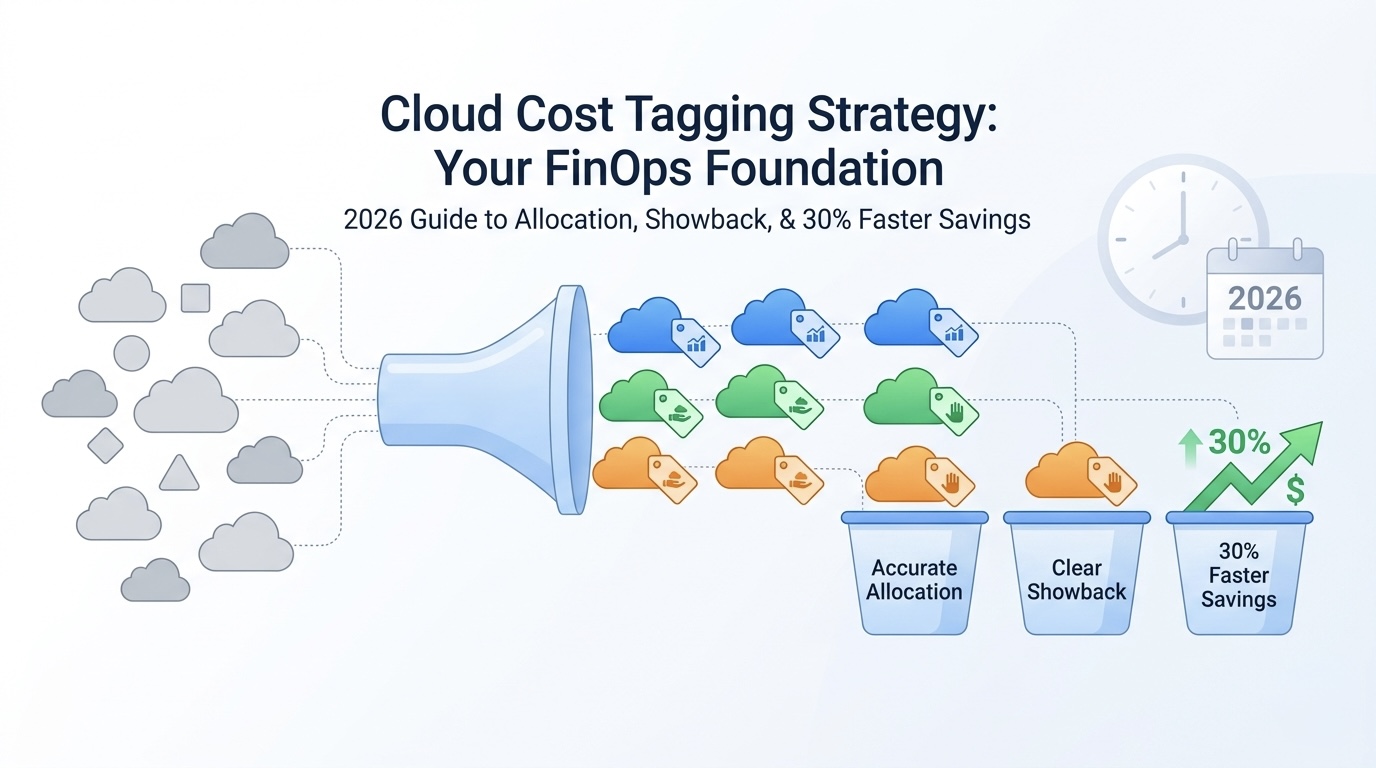
- Clear tagging policies so every resource has an owner
- Budget alerts that notify teams before spending gets out of hand
- Cost dashboards that make trends easy to understand
- Regular cost reviews tied to sprint planning or roadmap discussions
When engineers see the financial impact of their decisions, behavior changes naturally. Cost becomes another dimension of quality, just like performance and security.
Step 4: Commit to Ongoing Optimization
Cloud environments are never static. New features launch. Traffic patterns change. Teams grow. What is optimal today may not be optimal six months from now.
That is why continuous optimization matters. This includes:
- Monitoring usage trends
- Revisiting scaling policies
- Testing new cost-saving services
- Training teams on best practices
Many startups benefit from treating this function like an on-demand cloud center of excellence. Instead of hiring a full team, they partner with experts who provide guidance as needed.
The Results Startups Can Expect
When startups adopt a structured approach to cloud efficiency, the impact is dramatic.
Across our client base, we consistently see:
- An average of 30 percent reduction in AWS or cloud spend within the first three months
- Faster and more reliable CI/CD pipelines
- Development and staging environments that shut down automatically outside working hours
- Seamless migrations to more cost-effective architectures with zero downtime
Beyond the numbers, teams report something even more valuable. They feel back in control of their infrastructure. Cloud stops being a black box and becomes a strategic asset.
Why Cost Optimization Is Really a Growth Strategy
Many founders think of cost optimization as a defensive move. Something you do when budgets get tight. In reality, it is one of the most powerful growth levers available to startups.
Every dollar saved on unnecessary cloud spend is a dollar you can reinvest in:
- Hiring top talent
- Accelerating product development
- Expanding into new markets
- Improving customer experience
When combined with lean DevOps practices and automation, cloud efficiency delivers more than savings. It enables:
- Faster shipping cycles because environments are predictable
- Fewer outages because systems are designed intentionally
- Happier developers who spend less time firefighting and more time building
In today’s competitive landscape, operational excellence is not optional. It is a differentiator.
Common Myths That Keep Startups Overspending
To make real progress, it helps to challenge a few common assumptions that often hold teams back.
Myth 1: We Are Too Small to Worry About FinOps
The earlier you build good habits, the easier they are to maintain. Waiting until your cloud bill is huge makes optimization harder and more disruptive.
Myth 2: Cost Optimization Means Slower Development
Done right, it is the opposite. Clear systems and automation reduce friction. Teams move faster because they trust their infrastructure.
Myth 3: Only Experts Can Manage Cloud Costs
While deep expertise helps, many improvements come from basic discipline. Clear ownership, simple dashboards, and regular reviews go a long way.
A Practical Starting Point for Your Team
If all of this sounds overwhelming, start small. You do not need a full transformation overnight. Begin with three simple actions:
- Review your last three months of cloud bills and identify your top five cost drivers.
- Set up basic alerts so you know when spending spikes.
- Assign clear ownership of major services to specific team members.
These steps alone can change the conversation around cloud spend in your organization.
How LeanOps Helps Startups Win With the Cloud
Whether you are pre-DevOps hire or scaling fast after Series B, you do not have to tackle this alone.
At LeanOps, we bring the rigor of ex-Amazon engineering to startups that want enterprise-grade infrastructure without enterprise overhead. Our mission is simple. Help ambitious teams build systems that scale efficiently, reliably, and sustainably.
We partner with founders, CTOs, and engineering leaders to turn cloud operations into a competitive advantage rather than a liability.
Ready to Take Back Control of Your Cloud Budget
If you suspect your startup is wasting money in the cloud, you are probably right. The good news is that fixing it is easier than you think when you have the right approach.
Book a free Cloud and DevOps audit with our team, and in just 30 minutes we will uncover your top three opportunities to save money and improve reliability.
Your cloud should fuel your growth, not drain your runway. Let us help you make it work the way it was always meant to.