Three Tools, Three Philosophies, Wildly Different Results
Here is a pattern we see in nearly every mid-size Kubernetes deployment: the team picks a cost optimization tool based on a demo, deploys it, and six months later cannot quantify whether it actually saved anything.
The Kubernetes cost tool market in 2026 has three dominant players that keep appearing in every evaluation: Cast AI, Kubecost, and nOps. They all claim to "optimize Kubernetes costs." But after deploying all three on production-equivalent clusters and measuring actual bill impact over 90 days, we found they are fundamentally different products solving different problems.
One automatically reduced compute spend by 58%. One provided excellent visibility but required 40+ hours of engineering time to act on recommendations. And one added platform fees without proportional K8s-specific value.
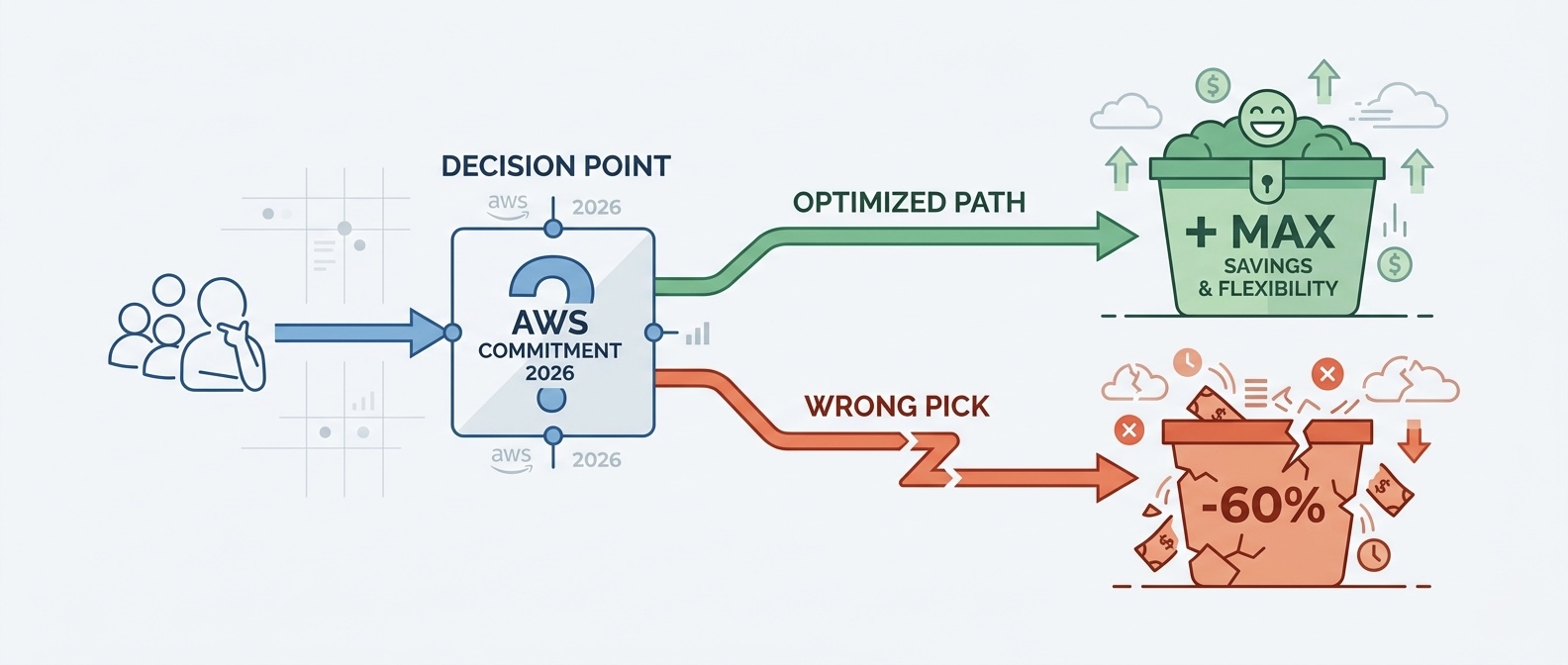
The wrong choice does not just waste the tool's license fee. It wastes 3-6 months of opportunity cost where your cluster continues bleeding money while you wait for results that require a fundamentally different approach.
The Core Architectural Difference Nobody Explains
Before comparing features, understand this: these tools operate at completely different levels of the stack.
| Tool | Category | How It Saves Money | Human Effort Required |
|---|---|---|---|
| Cast AI | Automation engine | Replaces cluster autoscaler, provisions optimal nodes, moves workloads to Spot, right-sizes in real-time | Near zero after setup |
| Kubecost | Visibility & allocation | Shows cost per namespace/deployment/team, recommends right-sizing, provides alerts | High (manual action required) |
| nOps | Cloud-wide platform | Manages commitments, Spot, and provides some K8s recommendations as part of broader AWS optimization | Medium (mix of automated and manual) |
This is the fundamental decision: Do you need a tool that does the optimization for you, or one that tells you what to optimize?
If your team has dedicated platform engineers who will act on recommendations weekly, Kubecost's visibility might be sufficient. If your team is stretched thin and nobody has time to right-size pods manually, Cast AI's automation is the only approach that delivers results without ongoing human effort.
Cast AI: The Aggressive Automation Approach
What It Actually Does
Cast AI is not a monitoring tool. It is a replacement for your cluster autoscaler (Cluster Autoscaler, Karpenter, or native autoscaling). When you install Cast AI, it takes over node provisioning decisions entirely.
Here is what happens after deployment:
-
Node replacement: Cast AI analyzes your workload requirements and provisions the cheapest possible node that meets the CPU, memory, and GPU constraints. It chooses from all available instance types (not just the ones in your node group config).
-
Spot automation: Workloads that tolerate interruption are automatically moved to Spot instances with fallback logic. Cast AI handles the interruption signals and graceful migration.
-
Right-sizing recommendations that auto-apply: Unlike tools that suggest "reduce this pod's memory request from 2Gi to 512Mi," Cast AI can actually apply the change if you enable auto-mode.
-
Bin-packing optimization: Instead of running three half-empty m5.xlarge nodes, Cast AI consolidates into fewer, right-sized nodes.
Real-World Savings Profile
From clusters we have evaluated with Cast AI enabled:
| Cluster Profile | Before Cast AI | After Cast AI | Savings | Payback |
|---|---|---|---|---|
| 20-node EKS, mixed workloads, $12K/mo | $12,000/mo | $5,040/mo | 58% | Immediate |
| 50-node GKE, production APIs, $45K/mo | $45,000/mo | $22,500/mo | 50% | Immediate |
| 10-node EKS, ML training, $8K/mo | $8,000/mo | $3,600/mo | 55% | Immediate |
| 5-node dev cluster, $2K/mo | $2,000/mo | $1,100/mo | 45% | Immediate |
The savings come primarily from: Spot instance adoption (30-70% per node), right-sized instance selection (20-40% per node), and elimination of idle capacity through aggressive bin-packing.
Cast AI Pricing in 2026
Cast AI uses a savings-share model:
- Free tier: 1 cluster, basic optimization, limited instance types
- Growth: ~20-30% of generated savings (you keep 70-80% of what it saves)
- Enterprise: Custom pricing, dedicated support, SLA guarantees
For a cluster spending $20,000/month where Cast AI saves $10,000:
- You pay Cast AI: ~$2,000-3,000/month
- Your net savings: $7,000-8,000/month
- ROI: 3-4x return on tool cost
Where Cast AI Falls Short
Cast AI is aggressive by design. This means:
- Startup risk: During the first 48-72 hours, Cast AI learns your workload patterns. Some teams experience brief scheduling disruptions as it replaces nodes.
- Control trade-off: You are handing over node provisioning to a third party. If Cast AI has an incident, your cluster scaling is affected.
- Stateful workloads: Databases, message queues, and other stateful pods require careful configuration. Cast AI handles this, but misconfiguration can cause data movement.
- Multi-cloud gaps: Cast AI works best on single-cloud EKS or GKE. Multi-cloud or on-prem hybrid is not its strength.
- Vendor lock-in: Once Cast AI manages your nodes, reverting to standard autoscaling requires re-engineering your node groups.
Kubecost: The Visibility-First Approach
What It Actually Does
Kubecost (built on the OpenCost open-source project) installs as a Prometheus-based monitoring stack inside your cluster. It does not change anything about how your cluster operates. It watches, measures, and reports.
Key capabilities:
-
Real-time cost allocation: See cost per namespace, deployment, label, annotation, or team. Break down shared costs (networking, control plane) across tenants.
-
Efficiency scoring: For every workload, Kubecost shows requested vs. actual usage. A pod requesting 4Gi memory but using 400Mi gets flagged with a 90% waste score.
-
Recommendations: Right-sizing suggestions for every container, with projected savings. Kubecost tells you exactly which pods to resize and by how much.
-
Alerts and budgets: Set budget thresholds per namespace or team. Get Slack alerts when a team exceeds their cost allocation.
-
Network cost tracking: Kubecost tracks cross-zone and cross-region traffic costs that are invisible to most monitoring tools.
Real-World Savings Profile
Kubecost does not save money directly. It tells you where to save. The savings depend entirely on whether your team acts on recommendations.
| Scenario | Kubecost Identifies | Team Acts On | Actual Savings |
|---|---|---|---|
| Well-staffed platform team, weekly reviews | $8,000/mo waste | 70% of recommendations | $5,600/mo (47%) |
| Busy team, monthly reviews | $8,000/mo waste | 30% of recommendations | $2,400/mo (20%) |
| Team with no FinOps process | $8,000/mo waste | 5% of recommendations | $400/mo (3%) |
| Team that installs and forgets | $8,000/mo waste | 0% | $0 |
The pattern is clear: Kubecost's value is directly proportional to the engineering hours you invest in acting on its recommendations.
Kubecost Pricing in 2026
- OpenCost (free forever): Open-source, basic cost allocation, community support
- Kubecost Free tier: Single cluster, 15-day retention, basic UI
- Kubecost Business: $199-499/month per cluster (depending on nodes), 30-day retention, multi-cluster, SSO
- Kubecost Enterprise: Custom pricing, unlimited retention, priority support, RBAC
For a 30-node cluster, expect $300-500/month for Business tier.
Where Kubecost Excels
- Multi-team environments: If you have 5+ teams sharing a cluster and need cost governance, showback, and budgets, Kubecost is purpose-built for this.
- FinOps reporting: Monthly cost reports by team, trend analysis, and budget variance reports.
- No operational risk: Kubecost is read-only. It cannot break your cluster because it does not change anything.
- OpenCost ecosystem: Being built on an open standard means portability and community plugins.
- Granular attribution: Network costs, shared service allocation, and idle cost distribution are more detailed than any competitor.
Where Kubecost Falls Short
- Recommendations without action are worthless. If nobody right-sizes the pods Kubecost identifies, you paid for a dashboard nobody uses.
- No automation. Kubecost cannot apply its own recommendations. Every optimization requires a human to modify pod specs, commit, and deploy.
- Prometheus dependency. Kubecost adds significant Prometheus metrics cardinality. On large clusters (100+ nodes), the monitoring overhead itself can cost $200-500/month in compute.
- Learning curve. Understanding cost allocation models, configuring accurate cloud pricing, and setting up team-based views takes 2-4 weeks of platform engineering time.
nOps: The Broad Cloud Platform Approach
What It Actually Does
nOps is a full AWS cost optimization platform that includes Kubernetes as one of its many capabilities. Unlike Cast AI (K8s-only) or Kubecost (K8s-only), nOps covers:
- EC2 commitment management (Reserved Instances, Savings Plans)
- Spot instance management (nSwitch)
- EBS and S3 optimization
- RDS rightsizing
- Kubernetes cost visibility and some automation
- CloudWatch and observability cost optimization
For Kubernetes specifically, nOps provides:
- Container right-sizing recommendations
- Spot instance management for K8s nodes
- Cost visibility by namespace and workload
- Integration with nSwitch for automated Spot
Real-World Kubernetes Savings
nOps's Kubernetes optimization is less aggressive than Cast AI because it does not replace your autoscaler. It works alongside your existing Cluster Autoscaler or Karpenter to optimize within the constraints you set.
| Approach | Typical K8s Savings | Total AWS Savings (including non-K8s) |
|---|---|---|
| nOps K8s-only features | 15-25% | N/A |
| nOps full platform (EC2 + K8s + Storage) | 15-25% K8s | 30-45% overall AWS bill |
| Cast AI on same cluster | 40-60% K8s | K8s only |
The value proposition of nOps is not K8s-specific savings. It is total AWS bill reduction when Kubernetes is one part of a larger cloud footprint.
nOps Pricing in 2026
nOps uses a percentage-of-savings model similar to Cast AI:
- Free tier: Limited features, single account
- Standard: ~25-35% of savings generated (you keep 65-75%)
- Enterprise: Custom pricing, dedicated CSM
For a company spending $50K/month on AWS where nOps saves $15K total (including K8s and non-K8s):
- You pay nOps: ~$4,000-5,000/month
- Net savings: $10,000-11,000/month
Where nOps Makes Sense
- AWS-heavy organizations: If your bill is 60%+ non-Kubernetes (RDS, EC2, S3, data transfer), nOps provides more total savings because it optimizes everything.
- Commitment management: nOps excels at managing Savings Plans and Reserved Instance portfolios. If your RI/SP utilization is below 80%, nOps can recover that waste.
- Companies that want one vendor: If managing separate tools for K8s, compute, storage, and commitments feels like too much overhead, nOps consolidates.
Where nOps Falls Short for Kubernetes
- Less aggressive K8s automation: nOps does not replace your cluster autoscaler. It cannot achieve the same bin-packing density as Cast AI.
- K8s is a secondary feature: The platform was built for EC2 and commitment management. Kubernetes was added later and it shows in the depth of optimization.
- No multi-cloud K8s: nOps is AWS-only. If you run GKE or AKS, nOps cannot help with those clusters.
- Slower time-to-savings: Because nOps optimizes commitments (which require purchase cycles) and uses less aggressive automation, full savings take 60-90 days vs. Cast AI's 48-72 hours.
The Decision Framework: Which Tool for Which Situation
Choose Cast AI When:
- Kubernetes compute is your #1 cost problem (>50% of your cloud bill)
- Your team lacks time to manually act on cost recommendations
- You want savings in days, not months
- You are comfortable giving a third party control of node provisioning
- Your clusters are on EKS or GKE (single cloud)
- You need 40-60% savings to justify the business case
Choose Kubecost When:
- You have 3+ teams sharing Kubernetes clusters and need cost governance
- Your FinOps team needs showback/chargeback data for internal billing
- You have dedicated platform engineers who will act on recommendations weekly
- You need network cost attribution and granular shared-cost allocation
- You want zero operational risk (read-only monitoring)
- Cost visibility and team accountability are more important than maximum savings
Choose nOps When:
- Your AWS bill is diverse (K8s + EC2 + RDS + S3 + data transfer)
- Kubernetes is less than 40% of your total cloud spend
- You need commitment management (RI/SP optimization)
- You want one platform for all AWS cost optimization
- Your K8s clusters are already reasonably well-sized (you need 15-25% improvement, not 50%+)
Choose Cast AI + Kubecost When:
- You need both maximum automated savings AND detailed team-level cost governance
- Your monthly K8s spend exceeds $15,000 (justifies paying for both)
- You have multiple teams that need budget visibility while Cast AI optimizes the underlying infrastructure
- You want Cast AI to reduce the total bill while Kubecost attributes the remaining costs to teams
Head-to-Head Feature Comparison
| Feature | Cast AI | Kubecost | nOps |
|---|---|---|---|
| Automated node optimization | Yes (core feature) | No | Limited |
| Spot instance automation | Yes (built-in) | No | Yes (nSwitch) |
| Right-sizing recommendations | Yes + auto-apply | Yes (manual only) | Yes (limited auto) |
| Cost allocation by team | Basic | Excellent | Good |
| Network cost tracking | No | Yes | Basic |
| Multi-cluster support | Yes | Yes (paid) | Yes |
| Multi-cloud | EKS + GKE | Any K8s | AWS only |
| Non-K8s optimization | No | No | Yes (full AWS) |
| Replaces autoscaler | Yes | No | No |
| Time to first savings | 48-72 hours | Weeks (requires action) | 30-90 days |
| Operational risk | Medium (controls nodes) | None (read-only) | Low |
| Open-source option | No | Yes (OpenCost) | No |
| Commitment management | No | No | Yes |
| Budget alerts | Basic | Excellent | Good |
| API for custom integrations | Yes | Yes | Yes |
Cost-of-Doing-Nothing Analysis
Here is what each month of delay costs you based on cluster size:
| Monthly K8s Spend | Cast AI Opportunity (50% savings) | Kubecost Opportunity (30% savings with action) | nOps K8s Opportunity (20% savings) |
|---|---|---|---|
| $5,000/mo | $2,500/mo lost | $1,500/mo lost | $1,000/mo lost |
| $15,000/mo | $7,500/mo lost | $4,500/mo lost | $3,000/mo lost |
| $30,000/mo | $15,000/mo lost | $9,000/mo lost | $6,000/mo lost |
| $50,000/mo | $25,000/mo lost | $15,000/mo lost | $10,000/mo lost |
Every month without an optimization tool is a month of full-price compute. For a 50-node cluster spending $30,000/month, choosing the wrong tool (or no tool) costs $15,000+ per month in unrealized savings.
What About Other Tools?
The Kubernetes cost optimization space has more than three players. Here is where others fit:
-
Karpenter (free, AWS): If you just need better autoscaling without third-party tools, Karpenter provides significant savings over Cluster Autoscaler. It is not a monitoring tool but solves the node-efficiency problem for free. Consider Karpenter first if you have not tried it.
-
Spot.io (NetApp): Similar to Cast AI in approach (automated node management) but broader cloud scope. Good for organizations already using NetApp products.
-
Finout: FinOps-focused with K8s visibility. Competes more with Kubecost than Cast AI. Strong on multi-service cost attribution.
-
PerfectScale: Kubernetes-specific automation, similar philosophy to Cast AI but with different optimization algorithms. Worth evaluating alongside Cast AI.
-
OpenCost: The free, open-source foundation under Kubecost. If you want cost allocation without paying Kubecost's license, OpenCost provides the core engine.
Implementation Playbook: Getting Started This Week
If you choose Cast AI:
- Start with one non-production cluster on the free tier
- Run in "observe only" mode for 72 hours to see projected savings
- Enable optimization on the non-production cluster and validate for 1 week
- Move to production with conservative settings (Spot disabled initially)
- Progressively enable Spot and aggressive right-sizing over 2-4 weeks
If you choose Kubecost:
- Deploy via Helm chart (10-minute install)
- Configure cloud integration for accurate pricing data
- Set up namespace-to-team mappings for cost allocation
- Schedule weekly 30-minute right-sizing review sessions
- Create budget alerts for each team at 80% and 100% of target
If you choose nOps:
- Connect your AWS account (read-only IAM role)
- Let nOps analyze 7-14 days of usage data
- Review commitment recommendations first (largest savings, lowest risk)
- Enable nSwitch for EC2/K8s Spot management
- Set up K8s cost allocation as a secondary priority
The Bottom Line
The Kubernetes cost tool you choose should match your organization's biggest constraint:
- Constrained on engineering time? Cast AI automates everything and delivers savings in days without ongoing human effort.
- Constrained on cost governance? Kubecost provides the visibility, allocation, and team accountability that FinOps requires.
- Constrained by AWS complexity beyond K8s? nOps covers the full bill and handles commitments, Spot, and K8s as part of one platform.
The worst choice is no choice. Every month without optimization is a month of full-price compute that you never get back.
If your Kubernetes clusters spend more than $10,000/month and you have not evaluated at least one of these tools, take our Cloud Waste & Risk Scorecard to quantify exactly how much you are leaving on the table. It takes 5 minutes and identifies your specific optimization priorities.
For teams ready to implement Kubernetes cost optimization immediately, our cloud cost optimization service includes tool selection, deployment, and tuning as part of our engagement. We have deployed all three tools across dozens of production clusters and can shortcut the evaluation process based on your specific architecture.
Further reading: